PERSONAL PROJECT
USER RESEARCH | YUXI ZHANG
REQUIREMENT MANAGE | YUXI ZHANG
PROTOTYPE DESIGN | YUXI ZHANG
PRODUCT TEST | YUXI ZHANG
USER RESEARCH | YUXI ZHANG
REQUIREMENT MANAGE | YUXI ZHANG
PROTOTYPE DESIGN | YUXI ZHANG
PRODUCT TEST | YUXI ZHANG
iPet is a technology-enhanced learning environment for pet owners, giving each pet owner the opportunity to learn the necessary pet knowledge and developing their awareness of caring for their pets.


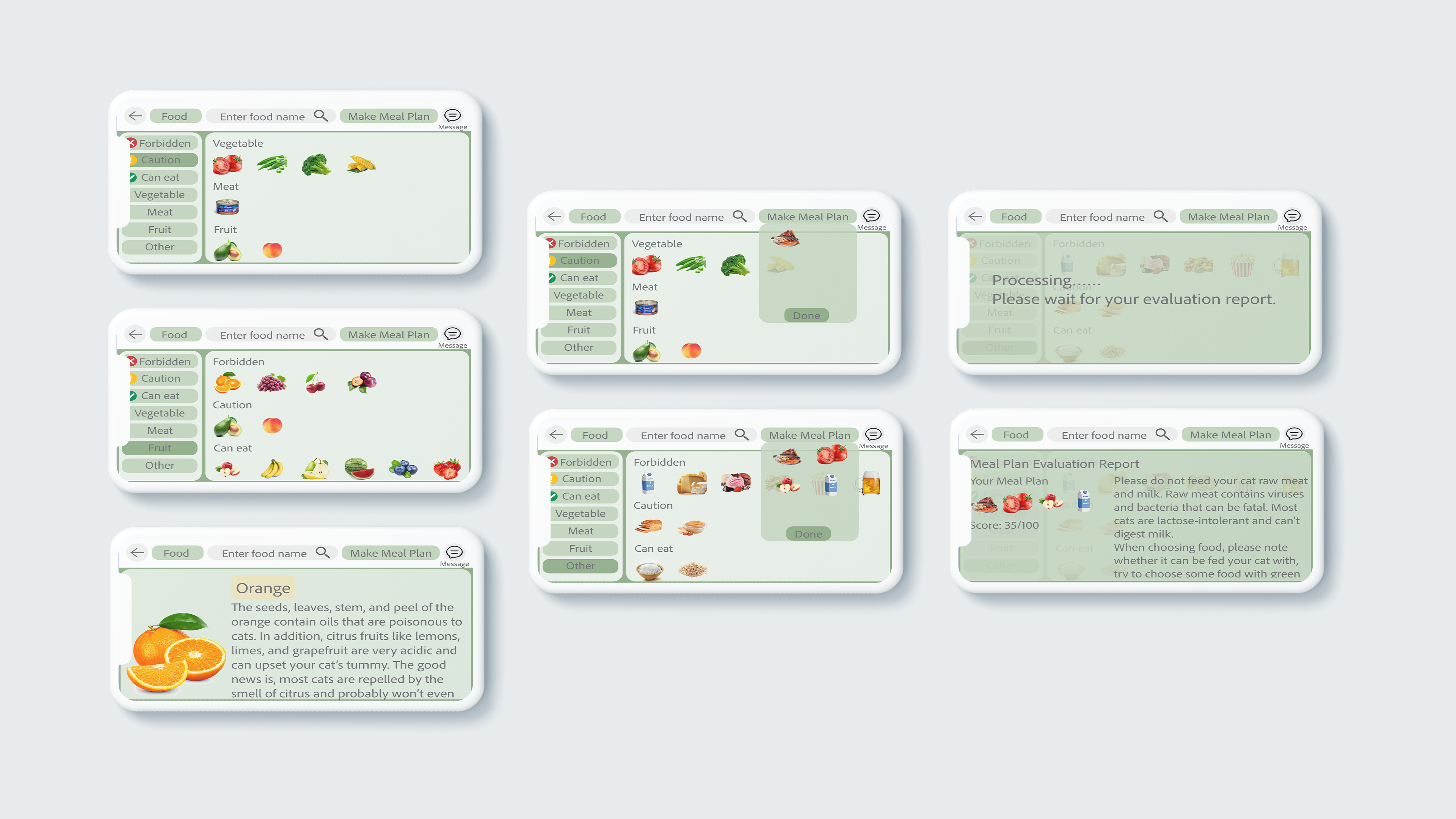
FUNCTION 1 - FROM CONSTRUCTIVISM AND CONSTRUCTIONISM TO FOOD PLAN
Theory
Knowledge is not a form of transmission from an exporter to a receiver, but an experience gained through the learner's interaction with the outside world.
Learning is more effective when learners are consciously involved in the construction of a communal entity.
Through the interaction between learners and the platform and the process of creating a meal plan, the learners can understand the learning content more deeply and achieve the learning goal more easily. Conversely, if the platform just directly gives learners some meal plans, they may not be able to understand the meaning of such food combinations directly.
Theory
Knowledge is not a form of transmission from an exporter to a receiver, but an experience gained through the learner's interaction with the outside world.
Learning is more effective when learners are consciously involved in the construction of a communal entity.
Through the interaction between learners and the platform and the process of creating a meal plan, the learners can understand the learning content more deeply and achieve the learning goal more easily. Conversely, if the platform just directly gives learners some meal plans, they may not be able to understand the meaning of such food combinations directly.

FUNCTION 2 - FROM BEHAVIOURISM TO TRAINING ROUTINE
Theory
Learning behaviour of animals occurs with a stimulus of its reinforcing effect.
The reinforcement stimuli are reinforced by the occurrence of that behaviour.
Case
When the cat uses the litter box correctly once, the trainer gives it some snacks or toys as a reward. These rewards will not be given when the cat is excreted outside the litter box.
No punishment for the incorrect defecation because cats do not associate punishment with the behaviour.
Theory
Learning behaviour of animals occurs with a stimulus of its reinforcing effect.
The reinforcement stimuli are reinforced by the occurrence of that behaviour.
Case
When the cat uses the litter box correctly once, the trainer gives it some snacks or toys as a reward. These rewards will not be given when the cat is excreted outside the litter box.
No punishment for the incorrect defecation because cats do not associate punishment with the behaviour.
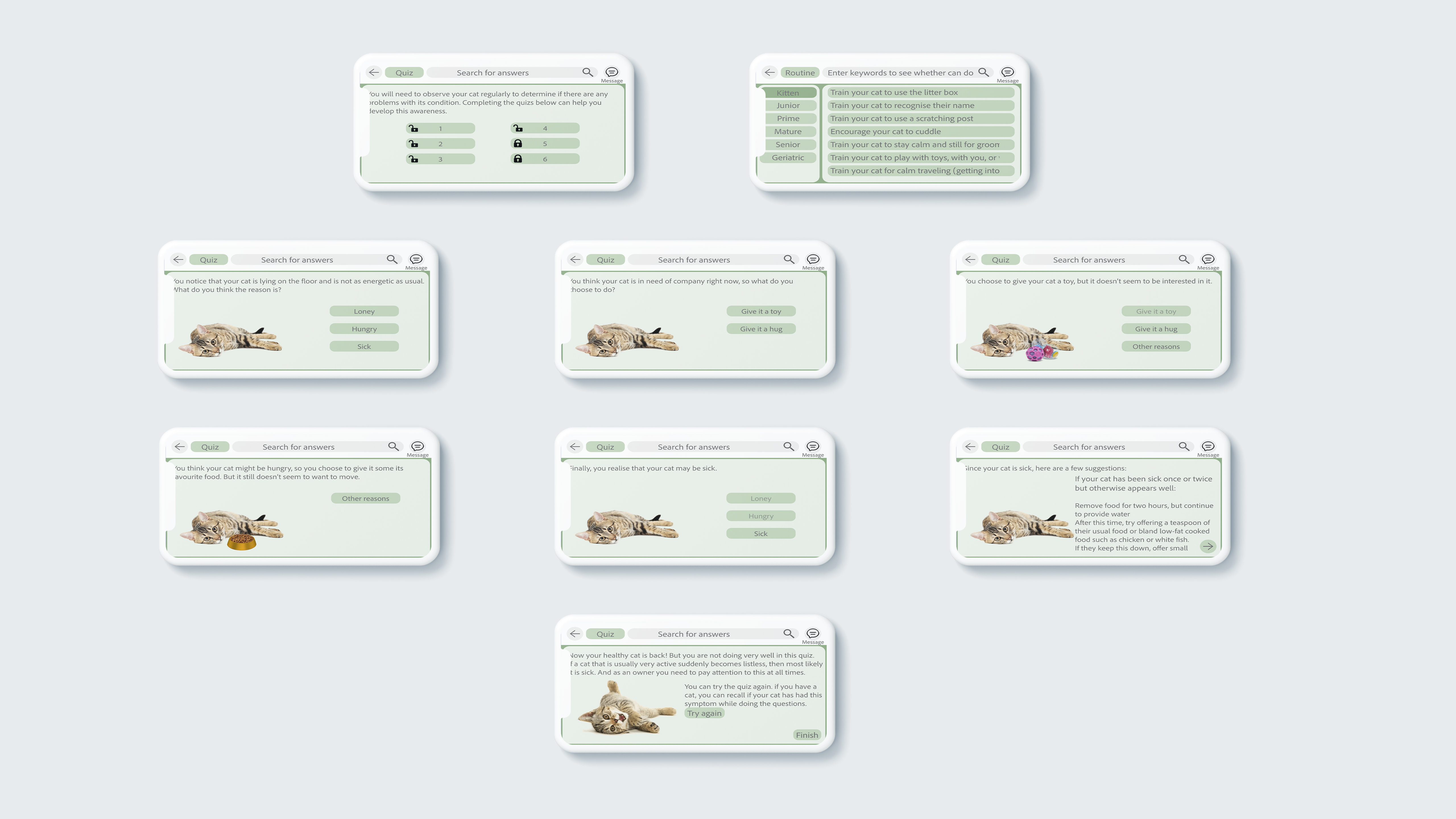
FUNCTION 3 - FROM COGNITIVISM TO QUIZ SECTION
Theory
Learning is the process in which cognitive structures are built and organised, with an emphasis on holistic and discovery learning.
The goal of these quizzes is not to determine whether the learner is a competent owner by the learner's choice of interactive content but to allow the learner to cultivate the ability to observe the pet in the process of constantly looking for the right answer.
After completing these quizzes, the learners will initially have a "cognitive map" of their pets. In this way, owners become better at observing their pets and develop a better tacit understanding of the pets.
Theory
Learning is the process in which cognitive structures are built and organised, with an emphasis on holistic and discovery learning.
The goal of these quizzes is not to determine whether the learner is a competent owner by the learner's choice of interactive content but to allow the learner to cultivate the ability to observe the pet in the process of constantly looking for the right answer.
After completing these quizzes, the learners will initially have a "cognitive map" of their pets. In this way, owners become better at observing their pets and develop a better tacit understanding of the pets.

A learning platform for all-year-round levels created in Adobe XD. Choose obvious buttons and soft colours to make it easy to use.
Comfortable experience with vast pictures and feedback from the platform.